Beyond Altitude: What Really Shapes Coffee Quality

Altitude is one of the most frequently used indicators when describing coffee quality.
Higher elevation is often associated with more complex, brighter, and more differentiated cup profiles. There is a good reason for that. At higher elevations, lower temperatures generally slow the maturation of the coffee cherry, allowing more time for the development of compounds associated with aroma, sweetness, acidity, and flavor.
But altitude alone does not determine quality.
A high elevation can create favorable conditions for a coffee to express its potential, but that potential still depends on what happens throughout the rest of the production process.

What Changes With Altitude?
One of the clearest differences is the speed of maturation.
At lower elevations, cherries tend to mature more quickly. These coffees are often associated with lower acidity and less complexity, with profiles that may include notes such as chocolate, panela, and cereals.
At mid elevations, coffees can show a more balanced combination of sweetness, acidity, aroma, and body. Common profiles may include caramel, toffee, chocolate, cacao, and a creamier mouthfeel.
At higher elevations, particularly above approximately 1,500 meters above sea level, beans often develop greater density and more pronounced sensory characteristics. Citrus, floral, and honeyed notes can become more evident, along with a brighter and more defined acidity.
In our experience, coffees produced above 1,700 meters often show particularly strong cup results. However, good quality can be found across a much wider range, approximately 1,200 to 2,000 meters, depending on the farm and how the coffee is managed.
Altitude Is Only Part of the Picture
Two coffees grown at the same elevation can still taste very different.
Variety, soil, agronomic management, cherry selection, fermentation, drying, and storage all influence the final result.
Certain varieties, such as Caturra, Bourbon, and Geisha, can perform particularly well at higher elevations, while others may be better adapted to different growing conditions. Processing also changes how a coffee expresses itself in the cup, whether it is washed, natural, or honey processed.
This means a well managed farm at a lower elevation can still produce very good coffee.
When the same variety is compared under similar agronomic and processing conditions, our experience suggests that higher elevation coffees often show greater complexity. But elevation should be understood as one factor within a broader quality system, not as a guarantee.
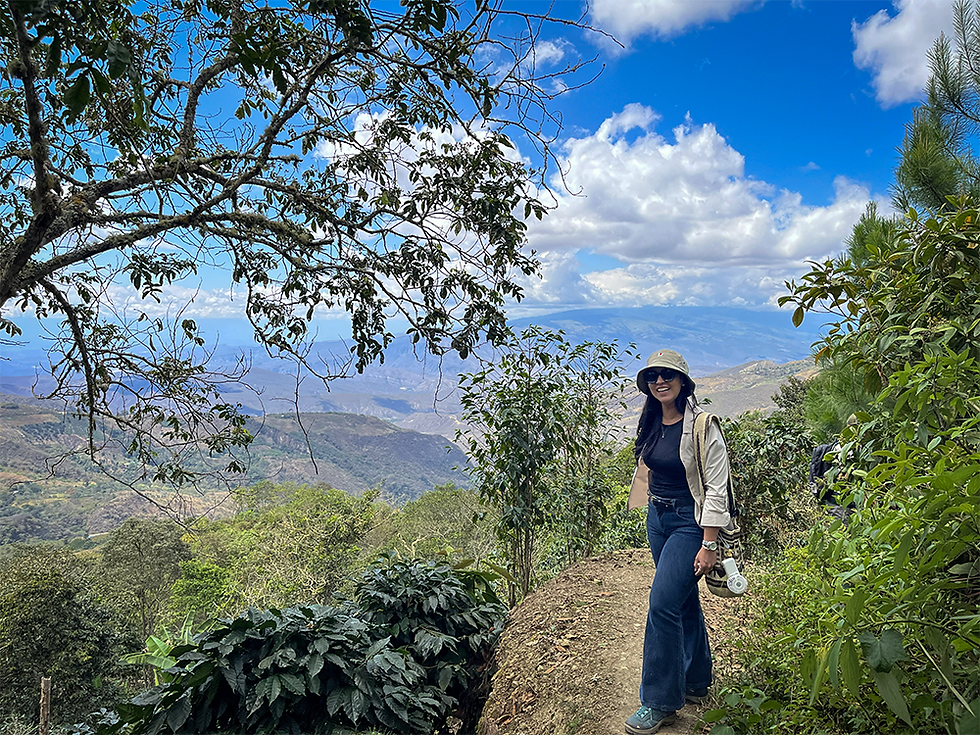
The Trade-Offs of Higher Elevation
Higher elevation can support quality, but it can also make production more difficult.
Access to farms may be more challenging, increasing transportation and logistics costs. Lower temperatures and rainfall can complicate drying, making appropriate infrastructure particularly important. Harvest timing is also affected because cherries generally require more time to reach maturity at higher elevations.
These conditions make post-harvest management especially important. The potential created in the field can still be lost if fermentation, drying, storage, or handling are not properly managed.
In coffee, each stage is connected to the next.
Climate Is Changing the Equation
Climate conditions are adding another layer of complexity.
This season, changes in rainfall patterns and greater pressure from pests and diseases such as coffee leaf rust have affected production conditions. Based on observations at origin, the main impact so far has been more visible in production volumes and yields than in cup quality.
Over the longer term, however, rising temperatures and changing rainfall patterns may affect which elevations remain suitable for coffee production.
Producers are already adapting through practices such as shade management, soil and water conservation, soil restoration, and selecting varieties that are better suited to the conditions of their farms.
These adaptations take time, particularly practices such as soil restoration, where benefits may not be immediately reflected in either yield or coffee prices.

What Should Buyers Look For?
Altitude remains useful information, but it should be considered alongside other indicators.
When evaluating a coffee, buyers should also consider the sensory profile, variety, agronomic practices, cherry maturity, processing method, consistency, and post-harvest management.
There is also an important sustainability consideration.
Increasing demand for coffees from ever higher elevations can create pressure to expand production into higher areas. In some regions, this may increase risks to forests and surrounding ecosystems.
For this reason, altitude requirements should be considered together with sustainability and no-deforestation criteria.
The objective should not simply be to source the highest coffee possible. It should be to understand why a coffee tastes the way it does, how consistently that quality can be produced, and whether the production system supporting it is viable over the long term.
For buyers, altitude is valuable context.
The cup still tells the fuller story.
Our latest coffee offer is constantly updated here


Comments